





In Gospel of Matthew 16:22–23, we witness a shocking moment between Jesus and one of His closest disciples, Peter the Apostle.
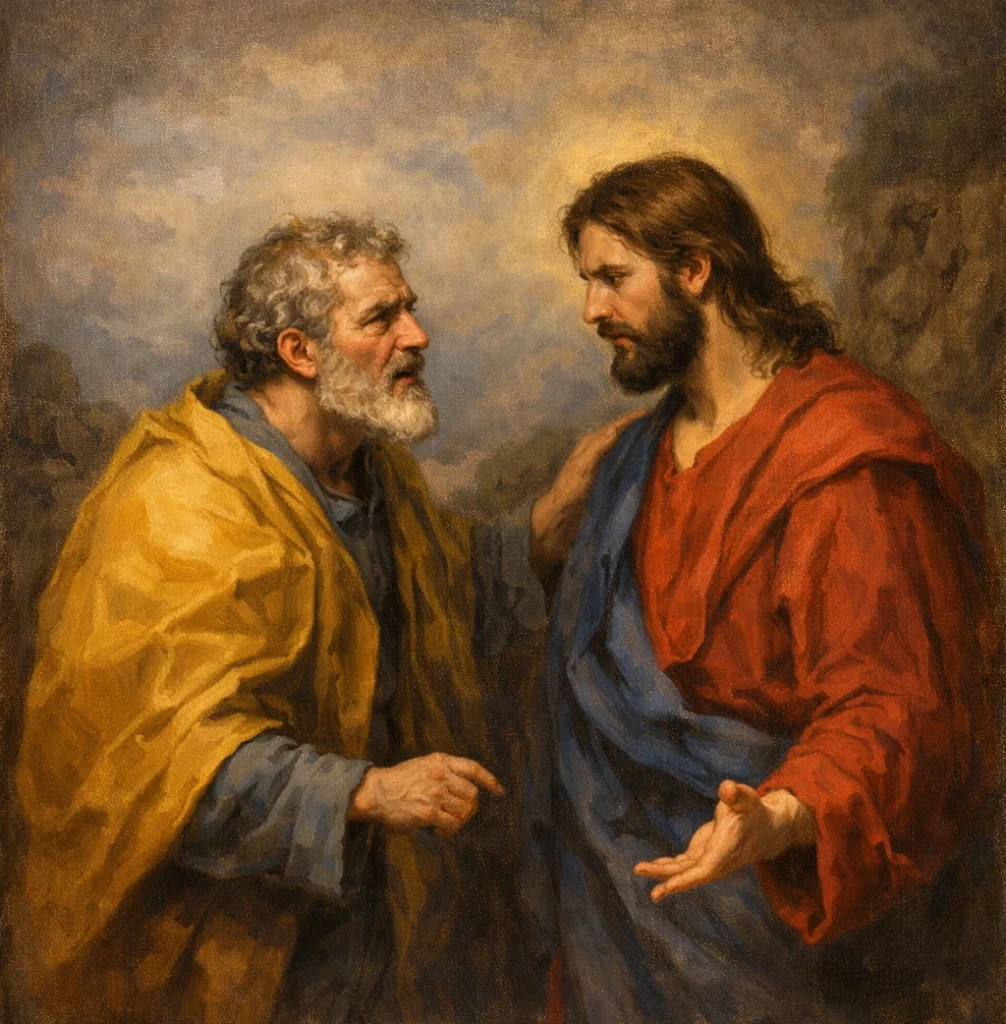
After Jesus explains that He must go to Jerusalem, suffer, be killed, and be raised on the third day, Peter pulls Him aside and rebukes Him:
“Never, Lord! This shall never happen to you!”
Peter’s words sound loving, protective, and loyal. But Jesus’ response is startling:
“Get behind me, Satan! You are a stumbling block to me; you do not have in mind the concerns of God, but merely human concerns.”
Why would Jesus speak so strongly to someone who clearly cared for Him?
This passage teaches us a powerful lesson: good intentions are not always aligned with God’s will.
1. Human Love Can Still Resist God’s Plan
Peter loved Jesus. He did not want Him to suffer. From a human point of view, Peter was being compassionate and protective.
But God’s plan for salvation required suffering. The cross was not a mistake—it was the mission.
Sometimes, like Peter, we:
- Pray for comfort when God is building character
- Avoid pain when God is shaping purpose
- Resist hardship when God is preparing victory
What feels “wrong” to us may be exactly what God intends for growth and redemption.
2. We Can Become a Stumbling Block Without Realizing It
Jesus calls Peter a stumbling block. That’s strong language.
Peter did not mean to hinder Jesus. Yet his mindset—focused on safety, comfort, and human reasoning—stood in the way of God’s redemptive plan.
This warns us that we can unintentionally:
- Discourage others from obeying God
- Advise people based on fear instead of faith
- Push comfort over calling
We must be careful that our advice, though well-meaning, is guided by God’s perspective and not only human emotion.
3. Thinking Like Humans vs. Thinking Like God
Jesus says, “You do not have in mind the concerns of God, but merely human concerns.”
This is the heart of the issue.
Human thinking says:
- Avoid suffering
- Protect yourself
- Choose the easy path
God’s thinking often says:
- Endure for a greater purpose
- Trust through pain
- Walk the narrow road
Following Christ means learning to think from God’s point of view, not just our own.
4. Not Every Loving Voice Is a Godly Voice
Peter’s voice was loving—but it was not aligned with God.
This teaches us discernment. Sometimes the voices closest to us:
- Family
- Friends
- Even our own thoughts
may pull us away from what God is calling us to do.
We must measure every voice against God’s Word and will.
5. The Cross Comes Before the Crown
Peter wanted the crown without the cross. He wanted victory without suffering.
But Jesus knew: there is no resurrection without crucifixion.
In our lives, we often want blessings without trials, growth without sacrifice, and glory without obedience. This passage reminds us that God’s greatest works often come through difficult paths.
What We Can Learn from Matthew 16:22–23
From this short exchange, we learn to:
- Align our thoughts with God’s will, not just human emotion
- Be careful that our advice does not hinder God’s work
- Accept that suffering can be part of God’s purpose
- Practice discernment, even with well-meaning voices
- Trust God’s plan, even when it feels uncomfortable
A Prayerful Reflection
“Lord, help me not to be a stumbling block to Your plans. Teach me to see from Your perspective, to trust You through discomfort, and to follow Your will even when it challenges my understanding.”
Matthew 16:22–23 reminds us that following Jesus requires more than love—it requires alignment with God’s heart and mind.
Subscribe for Daily Email Devotionals