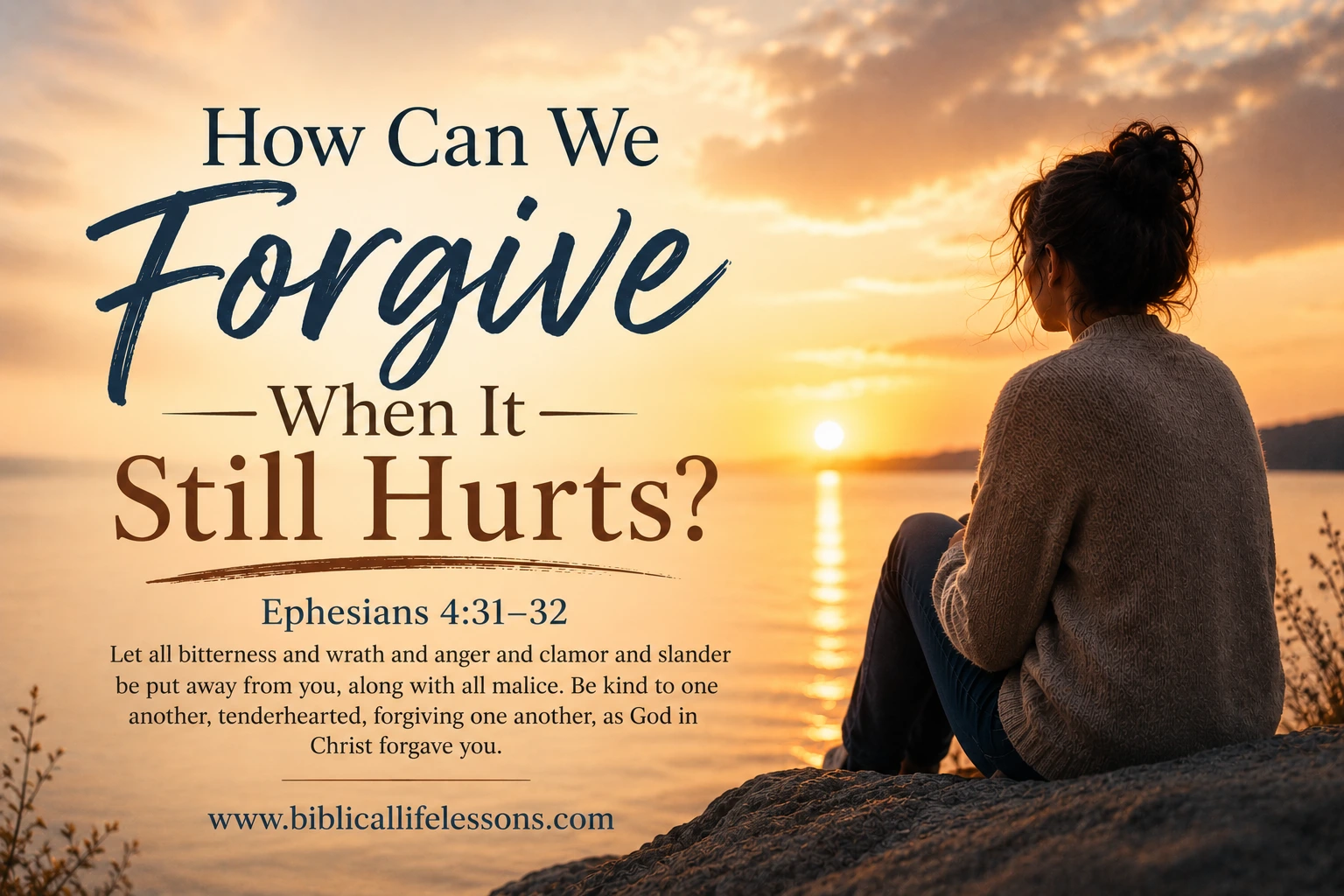
How Can We Forgive When It Still Hurts?
Forgiveness is one of the hardest commands in the Christian life, especially when the wound is fresh, the person is unrepentant, or the consequences are still ongoing. Yet the gospel is built on forgiveness. God does not ask us to do what He has not done for us.
Scripture Focus: Ephesians 4:31–32
“Get rid of all bitterness, rage and anger, brawling and slander, along with every form of malice. Be kind and compassionate to one another, forgiving each other, just as in Christ God forgave you.” (NIV)
What Forgiveness Is (and What It Is Not)
Forgiveness is releasing your right to revenge and placing ultimate justice in God’s hands. It is a decision of obedience that we often have to reaffirm daily while our emotions slowly catch up.
Forgiveness is NOT:
- Pretending the offense didn’t hurt.
- Calling evil “no big deal.”
- Removing wise boundaries.
- Automatically restoring trust.
You can forgive and still say, “This relationship must change.”
Three Truths About Forgiveness
1. It begins by remembering how much we’ve been forgiven.
The cross is our foundation. When we remember the sheer scale of God’s mercy toward us, our hearts begin to soften. Forgiveness does not minimize the sin committed against you; rather, it magnifies the grace that covers it.
A helpful prayer: “Lord, remind me of what You have forgiven in me, and give me the grace to extend that same mercy.”
2. It is often a process, not a single moment.
Sometimes forgiveness happens in an instant. Other times, it takes time, tears, wise counsel, and repeated prayer. If you have to keep bringing your pain back to God, that isn’t a sign of spiritual failure—it’s a sign of ongoing healing. When the memory or anger returns, you can respond by praying:
- “Lord, I release this person to You again today.”
- “Guard my heart from bitterness.”
- “Help me desire good for them, not ruin.”
3. It frees you from being controlled by the offense.
Unforgiveness ties you securely to your past, turning a temporary wound into a permanent prison. Forgiveness doesn’t say what they did was right; it simply means you refuse to let their actions rule your future. God cares deeply about your peace, and He does not want bitterness to become your identity.
Practical Steps to Take Today
- Name the hurt honestly before God. Avoid minimizing the pain.
- Ask the Holy Spirit for strength. Real forgiveness is impossible in our own human power.
- Release your demand for repayment. Trust God to deal justly with what you cannot fix.
- Set wise boundaries. Protect your heart and your well-being moving forward.
- Pray a blessing over the person—even if it has to be through clenched teeth at first.
Reflection Questions
- Where am I still holding onto bitterness or nursing a desire for revenge?
- What am I afraid will happen if I fully let go and forgive this person?
- What boundary or next step is wisdom asking me to put in place right now?
A Closing Prayer
Father, You have forgiven me in Christ more than I can ever fully measure. Honestly, it is incredibly hard to extend that same grace right now. Help me forgive the one who hurt me. Heal what is broken deep inside my heart. Keep me from turning bitter, and grant me clear wisdom regarding boundaries and reconciliation. I release this person and this pain into Your capable hands. In Jesus’ name, Amen.
Subscribe for Daily Email Devotionals
MEET FAITH FRIEND AI
Faith Friend is your friendly AI chatbot on BiblicalLifeLessons.com, here to help you explore the Bible, answer your faith-related questions, and guide you through life lessons based on God’s Word. Whether you’re seeking encouragement, understanding Scripture, or deepening your faith, Faith Friend is always ready to chat.