How Did Joseph Forgive the Brothers Who Sold Him?
Most of us have someone we have been carrying in our minds for a long time. A parent who wounded us early and never apologized. A friend who walked away when we needed them most. A sibling whose betrayal still flares up at family gatherings, even years later. We know we are supposed to forgive. We have probably tried. But somewhere underneath, the wound is still there — and the person who caused it has not even said sorry.
If that is the wound you are sitting with, no one in Scripture understands you better than Joseph.
Scripture Focus: Genesis 50:20
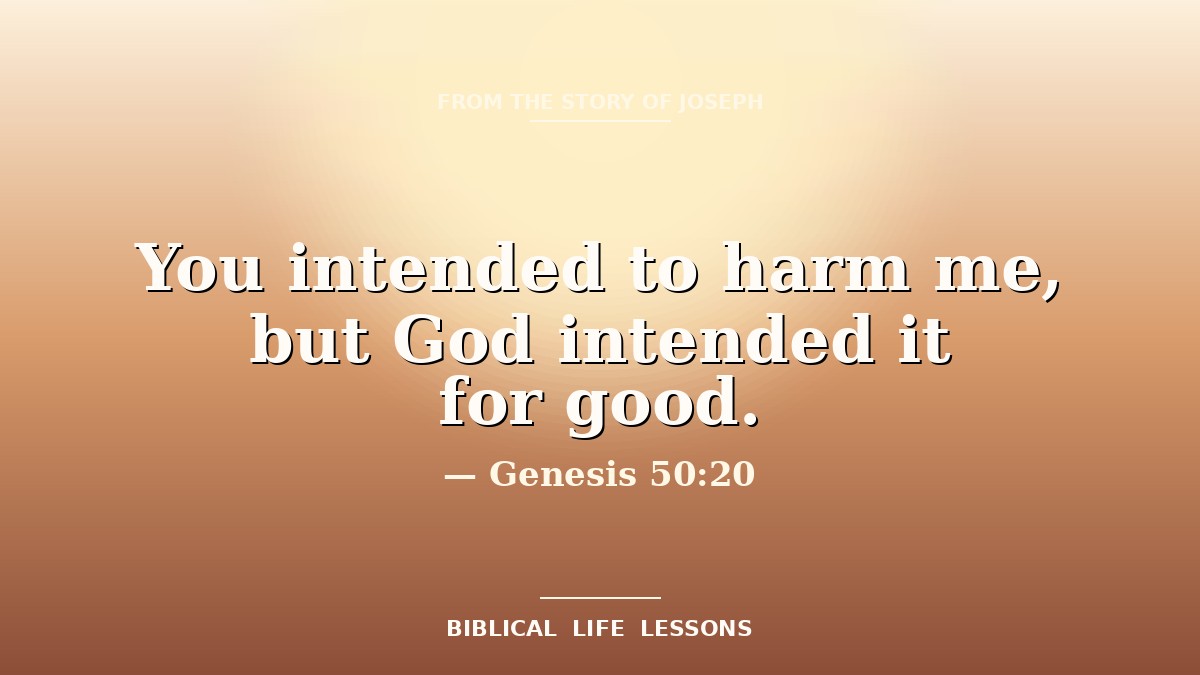
“You intended to harm me, but God intended it for good to accomplish what is now being done, the saving of many lives.” (NIV)
These are the words Joseph spoke to the same brothers who once threw him into a pit, sold him into slavery, and lied to their father about his death. Twenty-something years later, those same brothers were trembling in front of him — and Joseph chose forgiveness. Not because what they did was small. Not because they had earned it. But because he had learned to read his story with God in it.
Three Things Joseph’s Story Teaches Us About Forgiveness
1. Forgiveness does not minimize what happened.
Notice that Joseph does not say, “It was no big deal.” He says, “You intended to harm me.” He names the harm honestly. He does not pretend it did not hurt or wave it off as a misunderstanding. Real forgiveness is not denial. It is the courage to look the wound in the face and still refuse to let bitterness win. If you have been told you should “just get over it,” please hear this: Joseph did not get over it. He moved through it — with his eyes wide open to what really happened.
A simple prayer: “Lord, I bring You the wound, and I bring You the one who caused it. Help me forgive without pretending it didn’t hurt.”
2. Forgiveness becomes possible when you can see God in the story.
Joseph’s hinge is the word “but.” “You intended to harm me, but God intended it for good.” Joseph could not undo what his brothers had done. What he could do was step back far enough to see a larger story — one where God had been quietly at work even in the pit, even in Potiphar’s house, even in prison. He did not say their actions were good. He said God’s purposes were greater than their cruelty. When you can see God writing redemption into your story, forgiveness stops feeling like surrender to your enemy and starts feeling like trust in your Father.
3. Forgiveness is the bridge from victim to vessel.
The most striking thing in Joseph’s final scene with his brothers is what comes after the forgiveness. He says, “Don’t be afraid. I will provide for you and your children” (Genesis 50:21). The same hands that could have crushed them — Joseph was second only to Pharaoh — instead reached out to feed them. Forgiveness is what turned Joseph from a victim of his brothers’ cruelty into a vessel of God’s provision for them. Until you forgive, the person who hurt you still has a hand on your life. Forgiveness is how you take your hands back, and God’s, and offer something the wound never could.
Practical Steps to Take Today
- Name the wound honestly. Write down what was actually done. Don’t soften it. God already knows.
- Tell God you are willing — even if not able yet. Forgiveness is often a long road. The first step is telling God, “I’m willing to start walking this with You.”
- Look for the “but God” in your own story. Where, in hindsight, has God been quietly at work even in the seasons that felt cruelest? Naming His faithfulness in past pain builds faith for present pain.
- Pray for the person, not against them. You do not have to feel warm toward someone to pray for them. Ask God to bless them. Watch what it does to your heart over time.
- Set wise boundaries. Forgiveness is not the same as restored access. Joseph forgave his brothers, but he was also wise about how he reintroduced them into his life. You can release the offense without handing the person the keys to hurt you again.
Reflection Questions
- Whose name comes up in my heart when I read Joseph’s story — and what part of forgiveness am I most stuck on?
- Where might God be writing redemption into the very thing I have been most bitter about?
- What would it look like for me to take one small step from being a victim of this wound to being a vessel of grace because of it?
A Closing Prayer
Father, You see the wound I have been carrying for so long. You see the person whose face still comes to mind when I read about Joseph and the pit. I confess that forgiveness has felt impossible, and at times unfair. Thank You that You do not minimize what was done. Thank You that You are still writing a redemption story I cannot fully see yet. Give me the courage today to take one step toward forgiveness — not because the person deserves it, but because You are worth trusting. Heal what I cannot heal on my own. Turn this wound, somehow, into a place where Your grace flows out. In Jesus’ name, Amen.
Subscribe for Daily Email Devotionals
Subscribe for Daily Email Devotionals
MEET FAITH FRIEND AI
Faith Friend is your friendly AI chatbot on BiblicalLifeLessons.com, here to help you explore the Bible, answer your faith-related questions, and guide you through life lessons based on God’s Word. Whether you’re seeking encouragement, understanding Scripture, or deepening your faith, Faith Friend is always ready to chat.